
Priority problem
Every click is called a conversion
Button clicks, form starts, submissions, qualified leads, purchases and customers represent different stages. Combining them can mislead bidding and reporting.
GA4 · Google Tag Manager · Ads conversions · Validation
GrowthLabs plans and reviews analytics and conversion tracking for businesses that need clearer evidence across websites, SEO, Google Ads, Meta Ads and landing pages. The engagement begins by defining the valuable action and its business meaning before configuring tags, events, parameters or dashboards.
Share the website, marketing platforms, important actions, current analytics access and the decisions your reporting cannot answer.

Analytics & Conversion Tracking / Decision summary
A useful analytics & conversion tracking engagement connects the immediate business constraint to the capability, customer journey and measurable outcome that can address it.
Priority problem
Button clicks, form starts, submissions, qualified leads, purchases and customers represent different stages. Combining them can mislead bidding and reporting.
Connected capability
Define business questions, important journeys, event names, parameters, owners and primary versus supporting actions before implementation.
Working outcome
Build a measurement system where event names, platform signals, qualified outcomes and reporting decisions use explicit definitions.
Start with context, not a package. Share the current website, offer, audience and result that needs to improve.
Request a tracking reviewThe objective
Build a measurement system where event names, platform signals, qualified outcomes and reporting decisions use explicit definitions.
What gets in the way
Button clicks, form starts, submissions, qualified leads, purchases and customers represent different stages. Combining them can mislead bidding and reporting.
Duplicate tags, route changes, thank-you page reloads or overlapping platform integrations can inflate reported actions and hide implementation defects.
GA4, Google Ads, Meta, CRM and sales records use different identity, attribution, time, consent and conversion rules. A useful system reconciles definitions instead of forcing totals to match.
A tag can fire successfully while sending the wrong parameters, recording an unqualified action or omitting the context needed for a decision.
When reporting ends at a web form, campaigns cannot distinguish qualified leads, unreachable contacts, customers, revenue or margin without an agreed feedback process.
More charts do not solve unclear objectives. Reporting should show the question, definition, period, evidence, limitation and the next decision.
The system in context
Conversion optimisation finds and reduces friction between qualified attention and meaningful action.

Capabilities
01
Define business questions, important journeys, event names, parameters, owners and primary versus supporting actions before implementation.
02
Plan or inspect automatically collected, enhanced-measurement, recommended and necessary custom events in the context of the website.
03
Organise tags, triggers, variables, naming and environments with a versioned, testable workflow and documented ownership.
04
Review which website, call or imported actions belong in advertising reports and which actions should inform bidding versus observation.
05
Map Pixel, eligible server-side signals and campaign events to the same qualified-action definitions while recognising platform attribution boundaries.
06
Coordinate the measurement requirement with consent choices, privacy language, data retention and the rule that personal or secret information must not enter URLs or event payloads.
07
Create consistent source, medium, campaign, term and content conventions that make acquisition reporting easier to interpret.
08
Test important journeys across browsers and devices, document limitations and connect reports to specific budget, page, audience or offer decisions.
What the work creates
01Explicit conversion definitions
02Cleaner event and tag ownership
03Validated platform signals
04Reports connected to the next business decision
Measurement evidence / configured conversion reporting
The supplied Google Ads captures show 474.79 and 929.99 reported conversions for two separate accounts and periods. Fractional totals can reflect attribution modelling or configured conversion counting; GrowthLabs audits what each action means before treating it as a qualified lead or sale.
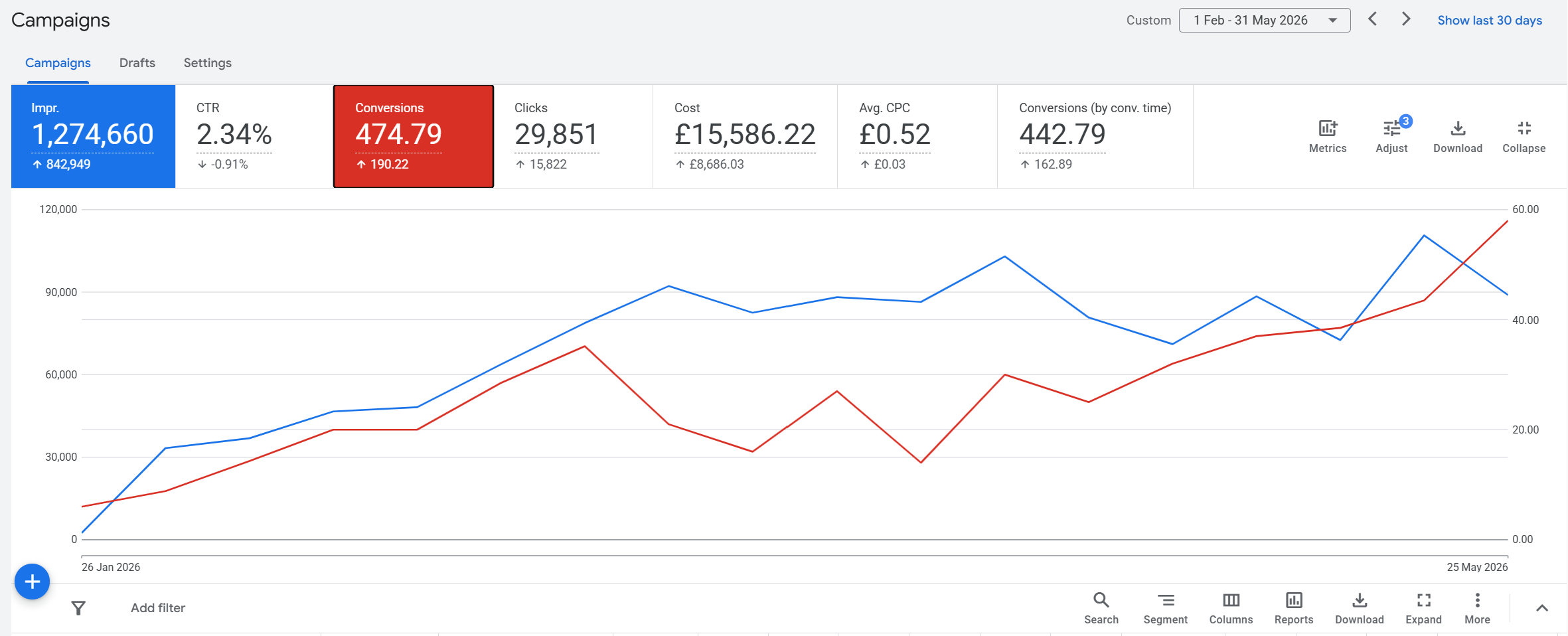
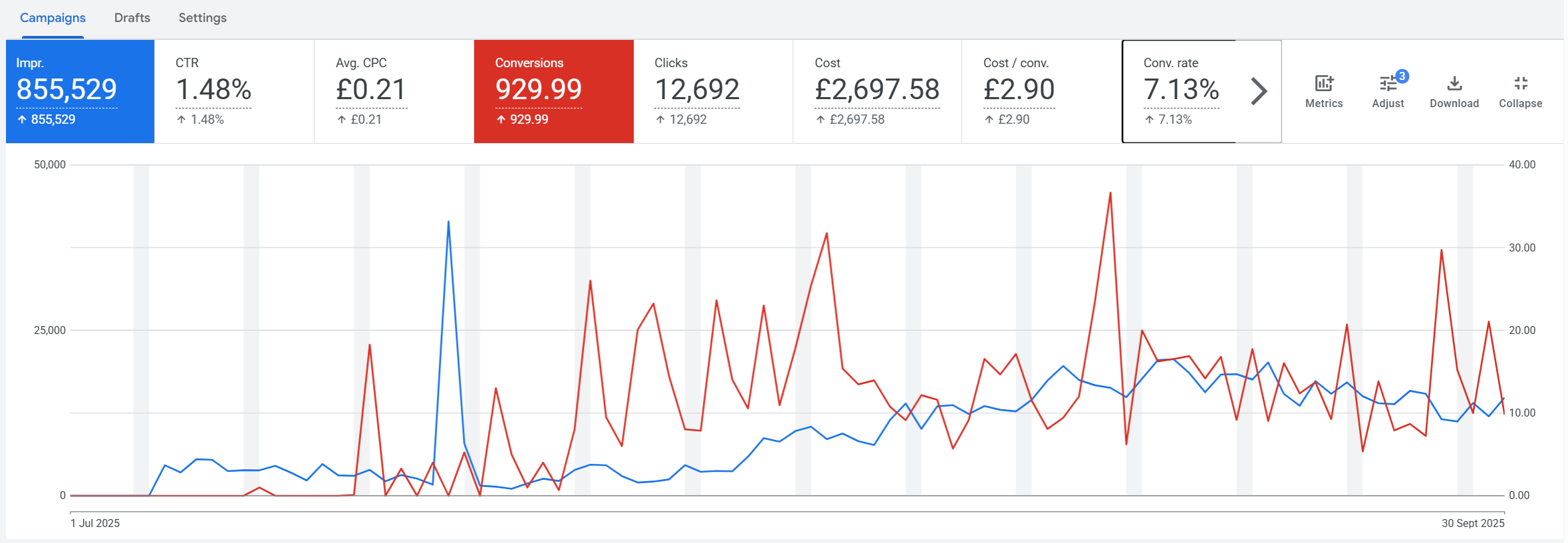
These anonymised Google Ads interface captures show account-reported campaign activity. ‘Conversions’ reflects configured account actions and attribution settings; the captures do not by themselves verify customers, revenue, profitability, sole attribution or future results.
Verified GrowthLabs credentials
We have confirmed that the supplied partner and certification artwork is authorised for GrowthLabs. Each credential is shown in its original supplied form and placed beside the service it supports.

Platform credential
Certified Google Ads Partner credential supplied and confirmed for GrowthLabs.

Platform credential
Certified Meta Ads Partner credential supplied and confirmed for GrowthLabs.

Platform credential
Certified HubSpot Agency Partner credential supplied and confirmed for GrowthLabs.
Credentials establish platform familiarity; the adjacent account captures show selected reported performance. Neither replaces a scope-specific audit, current platform verification or an agreed definition of a qualified conversion.
A measurement hierarchy
The commercially meaningful result, such as a paid order, verified booking or accepted customer, defined by the business system.
An action meeting agreed criteria, such as a valid enquiry within the service area or a completed booking request.
An event configured and attributed under Google Ads, Meta or another platform's rules; it may not equal a customer.
A supporting interaction such as a form start, phone-link click, resource download or meaningful page step used for diagnosis.
Process
Agree the business objective, qualified actions, journey events, reporting questions and system of record.
Inspect current tags, events, data flow, conversions, consent, campaign naming and reported anomalies.
Create the event taxonomy, data requirements, trigger logic, ownership and acceptance tests.
Configure the agreed system and test events, parameters, duplicates, destinations and platform status.
Compare platform signals with qualified business outcomes and revise reporting or implementation when definitions change.
Primary references
These sources support the factual platform and search-system statements on this page. GrowthLabs interpretation, scope and recommendations remain clearly separate from platform documentation.
Source-backed platform facts
Google Analytics documents events as measurements of interactions or occurrences, including page loads, clicks and purchases. Google Ads distinguishes website, call, app and offline conversion sources and lets advertisers choose which actions appear in the main Conversions reporting column. These systems become useful only after the business defines what each action means.
GA4 documents four categories: automatically collected, enhanced measurement, recommended and custom events. Custom events should be used when an appropriate predefined event does not fit.
Google Ads supports measurement for website actions, calls, apps and eligible offline outcomes, with different setup requirements.
Google Tag Manager preview connects a site to Tag Assistant so implementers can inspect which tags fired, in what order and with what data before publishing.
Reconciliation boundaries
Differences can result from attribution windows, identity, cookies, consent, ad blockers, cross-device behaviour, time zones, imported outcomes, processing delays and each product's counting rules.
State which system owns the business truth, which platforms provide directional attribution and how often sources are reconciled.
Large or sudden differences still deserve testing for duplicate tags, missing consent states, broken redirects, cross-domain configuration or changed conversion definitions.
Use ranges, qualified outcome feedback and visible limitations rather than presenting platform precision as complete commercial certainty.
Related expertise
FAQ
They define, implement and validate how important website and campaign interactions are recorded across analytics, advertising and business systems, then connect that evidence to useful decisions.
An event records a defined interaction or occurrence. A conversion is an event selected as commercially or strategically important under a platform or business definition.
Not automatically. A Google Ads conversion is a configured action attributed under Google Ads rules. Customer status should be verified using the relevant CRM, ecommerce, booking or finance system.
Not every implementation requires both, but Tag Manager can provide a controlled way to deploy and test analytics and advertising tags. The appropriate architecture depends on the platform, integrations and governance needs.
GrowthLabs can diagnose common duplicate-event causes, define deduplication and trigger requirements, support implementation and validate the resulting journey within the agreed access and platform scope.
They use different identity, attribution, time, consent and counting rules. Some difference is expected; material anomalies still need implementation and definition checks.
A dashboard can be included when it answers agreed questions. The priority is reliable definitions and validated evidence, not the number of charts.
Share the website, important journeys, marketing platforms, current analytics and tag access, privacy or consent constraints and the decisions current reporting cannot answer.
Measurement you can explain
Share the website, current platforms and reporting problem. GrowthLabs will map the measurement question, required access and safest useful starting point.
No booking maze and no forced package. Use the secure form, WhatsApp, email or call us directly.