
Constraint / 01
No clear keyword strategy
Broad terms are targeted without deciding which belong on the homepage, service pages, location pages, or supporting articles.
GrowthLabs / Direct founder-led SEO strategy
We provide direct specialist SEO strategy, audits and implementation guidance in Nepal. Our work focuses on the parts of SEO that determine whether visibility becomes business: search intent, technical foundations, page architecture, useful content, internal links, local relevance and conversion paths.
The objective is not rankings in isolation. It is to help the right people discover the business, understand why it fits, and take a measurable next step.
Share your website, target market, and most important SEO challenge. The first conversation identifies the constraint before scope is recommended.

01Direct access to our founder-led team
02Technical + content + local SEO
03Intent-led page mapping
04SEO connected to CRO

Strategy without unnecessary layers
SEO often loses momentum when the strategist understands the problem but the work passes through layers before it reaches the website. We stay involved in the analysis, keyword-to-page map, technical priorities, page direction, local visibility and conversion journey.
Direct specialist input is useful when you need to diagnose a decline, plan a migration, decide which commercial pages to build, strengthen local visibility, or give an internal content and development team clear priorities.
When the scope requires broader implementation, the engagement can continue through GrowthLabs without losing the strategic thread.
Verified professional context
Our SEO work sits inside a broader growth-marketing practice. That context matters when search performance depends on the offer, landing page, tracking, advertising data or the way a lead is handled after the click.
Paid media, SEO, CRO, analytics, tracking, reporting, landing pages, creative strategy, and automation.
Progressed from SEO execution into SEO and paid advertising, website optimisation, creative direction, research, analysis, and reporting.
Why SEO struggles
Publishing more is not the same as building search visibility. Strong SEO needs the right demand, pages, technical foundation, content, links, and conversion journey.
Constraint / 01
Broad terms are targeted without deciding which belong on the homepage, service pages, location pages, or supporting articles.
Constraint / 02
Missing commercial pages, unclear hierarchy, poor headings, and disconnected internal links make the business harder to understand.
Constraint / 03
Repetition does not build trust. Useful SEO content must answer the real question, match the intent, and guide an appropriate next step.
Constraint / 04
Slow pages, crawl errors, duplicate content, poor mobile usability, broken links, and weak indexing can hold back otherwise strong work.
Constraint / 05
Ranking is incomplete if the visitor cannot understand the service, see credible proof, or find a clear path to call, email, or message.
Constraint / 06
Links and mentions cannot compensate for weak pages, while useful pages may still struggle without relevant internal connections and genuine external authority.
What good SEO must solve
Give every useful search a credible destination, and make the journey after the click just as deliberate as the work before it.
01
Identify the problems, services, locations, industries, and questions people actually search for, then separate raw volume from commercial relevance.
02
Understand whether the searcher wants to learn, compare, find a provider, solve a local need, or take action.
03
Give every valuable keyword cluster one clear canonical destination instead of making pages compete with one another.
04
Make important pages crawlable, indexable, fast enough, mobile-friendly, and technically understandable.
05
Answer the real question with specific, useful information rather than repeated keywords or generic filler.
06
Connect relevant pages clearly and build legitimate signals that support credibility beyond the website.
07
Turn earned attention into a call, message, enquiry, booking, purchase, or other useful next step.
08
Track query mix, landing-page quality, conversions, and lead value so the next decision is based on evidence.
SEO services with direct specialist involvement
The plan is shaped by search intent, opportunity, website condition, competition, content quality, local visibility, and business goals.
01
Identify technical issues, content gaps, structural weaknesses, indexability problems, internal-link gaps, and conversion friction before deciding what to build.
02
Find what customers search, classify the intent, group related terms, and map each cluster to the page best suited to satisfy it.
03
Help search engines crawl, understand, and index the site through a stronger technical foundation and cleaner architecture.
04
Make individual pages clearer for search engines and people through titles, headings, useful depth, natural keyword use, images, links, and calls to action.
05
Plan service pages, landing pages, topic clusters, FAQs, and supporting articles around search intent and business value, not an arbitrary publishing quota.
06
Improve location-based visibility across Kathmandu Valley and Nepal through local intent, service areas, Google Business Profile, reviews, and relevant pages.
07
Connect commercial, local, industry, and supporting pages so users and search engines can understand the hierarchy and move through it naturally.
08
Build organic landing pages that make the offer, audience, proof, next action, and local relevance clear after the visitor arrives.
Advice your team can act on
Scope determines the deliverables, but the output should make priorities visible and implementation practical.
A six-part working method
Research is translated into a sequenced plan, implemented against the highest-value constraint, validated, and improved with evidence.
Clarify the offer, audience, target market, commercial priorities, current website and definition of a qualified conversion.
Review queries, competitors, landing pages, technical behaviour, content, internal links, local signals and current conversion evidence.
Assign valuable keyword groups to canonical pages and prioritise work by likely value, evidence, effort and dependency.
Improve the agreed pages, technical foundations, content briefs, internal links, local signals and measurement.
Check that technical changes work as intended, content matches the mapped intent and tracking records the right actions.
Review query mix, qualified traffic, conversions and lead quality, then invest in the next highest-value constraint.
Expert or company?
Direct SEO expert
An individual expert is useful when you need a senior audit, keyword map, technical direction, commercial page plan, migration guidance, or a clear roadmap your team can implement.
SEO company
A company model fits a wider programme that combines research, technical work, on-page implementation, content planning, local search, reporting, and ongoing coordination.
We combine direct strategic access with implementation capacity that can expand when the agreed scope requires it.
Compare the SEO company modelDifferent journeys, different search systems
The architecture and conversion event should reflect how customers research, compare, and buy, not force every business into the same template.
Model / 01
Commercial service pages, location relevance, useful proof, and enquiry paths built around how prospective customers compare providers.
Model / 02
Property and location visibility, direct-booking journeys, local search, offer pages, and content shaped around guest intent.
Explore this systemModel / 03
Destination, package, and itinerary architecture connected to seasonal demand, local relevance, and high-intent enquiry journeys.
Explore this systemModel / 04
Category and product structure, technical health, informational support, internal links, and organic landing-page conversion.
Model / 05
Google visibility, reviews, local pages, clear business information, and frictionless routes to call, directions, or bookings.
Model / 06
Demand research, website architecture, focused commercial pages, and an SEO roadmap that grows with the offer.
Tools support decisions
Depending on access and scope, analysis may use Google Search Console, GA4, Google Tag Manager, Google Business Profile, PageSpeed Insights, crawl tools, Ahrefs, Semrush, Screaming Frog, Microsoft Clarity, or Hotjar.
No single platform is absolute truth. Tools provide evidence; the useful work is deciding what that evidence means for this website, this market, and this business.
Search evidence / source captures
An Australian agency and a Texas local-service website require different architecture, competition analysis and conversion paths. The captures make the visible Search Console layer inspectable while the surrounding context remains essential.
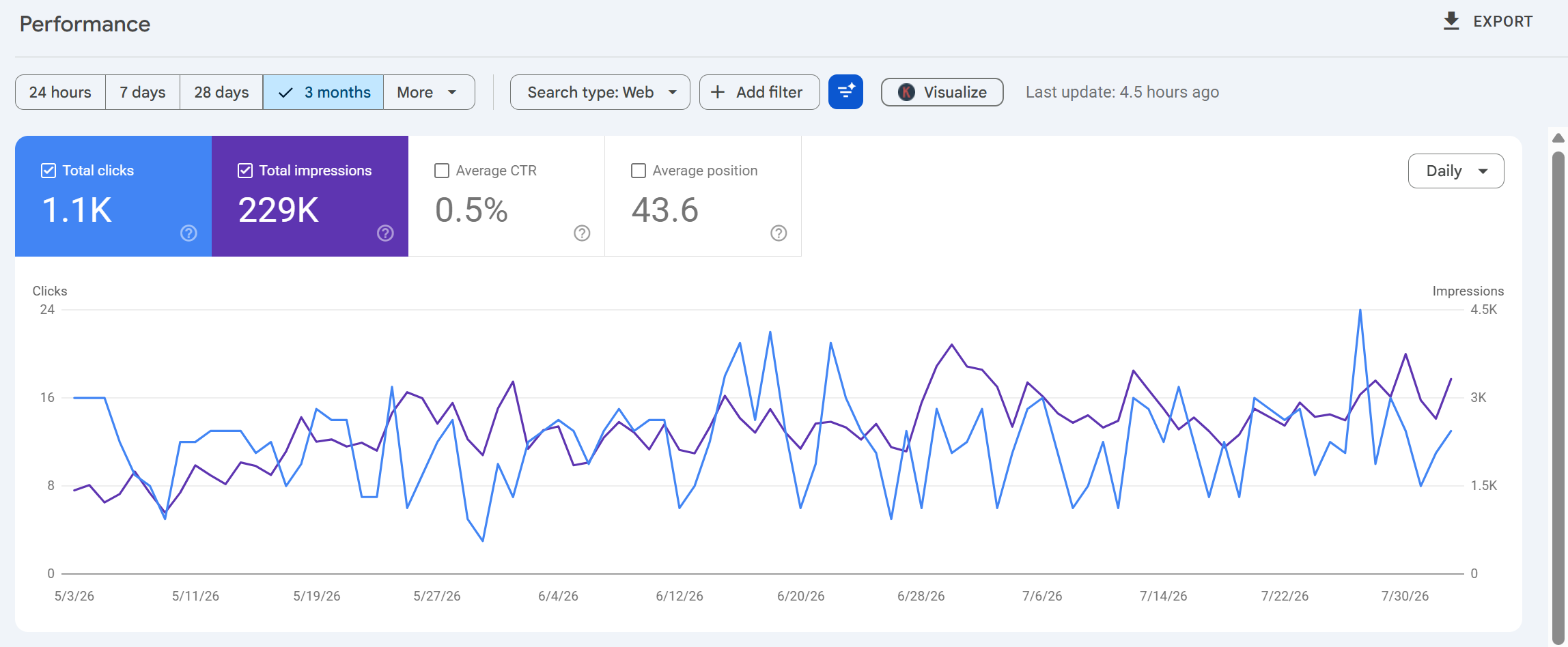
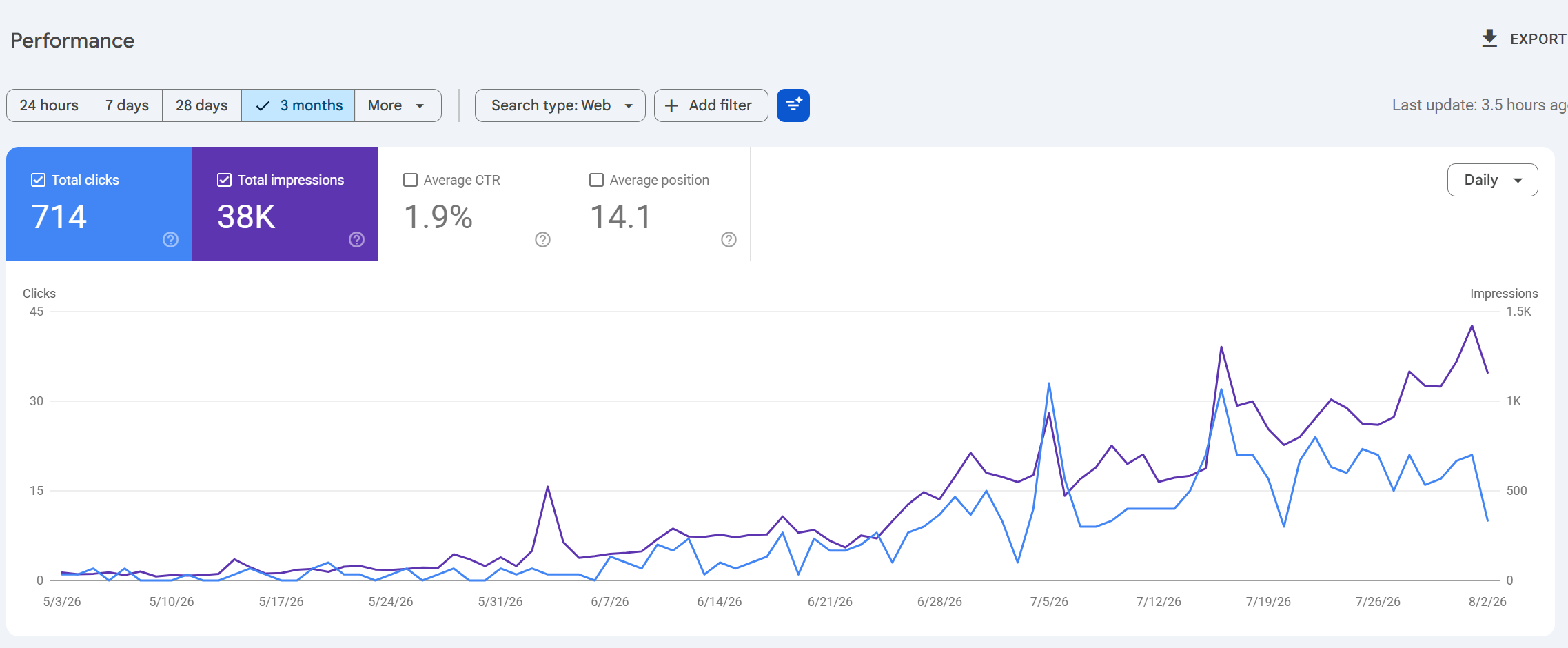
These anonymised Google Search Console captures show monitored organic visibility in the source interface. They are not promises of rankings, leads, revenue or sole attribution. A responsible review still checks the baseline, period, pages, market conditions and work completed.
Verified GrowthLabs credentials
The Semrush Certified Agency Partner artwork supports the competitive-research context described on this page. The Google Reviews artwork displays a 5.0 rating and links visitors to the GrowthLabs business profile.

Platform credential
Semrush Certified Agency Partner credential supplied and confirmed for GrowthLabs.

Public rating artwork
GrowthLabs Google Reviews artwork displays a 5.0 rating; no review-count claim is added without a supplied count.
View the Google Business ProfileCredentials establish platform familiarity; the adjacent account captures show selected reported performance. Neither replaces a scope-specific audit, current platform verification or an agreed definition of a qualified conversion.
Reduce the risk
Look for reasoning you can inspect, not a promise you cannot verify.
Responsible expectations
Focused corrections can create useful signals and learning relatively quickly, especially when a strong page is being held back by a clear technical, intent, or conversion problem.
Competitive commercial growth usually takes sustained work across technical foundations, page quality, internal links, local relevance, useful content, and genuine authority. Search engines, not providers, decide final positions.
The responsible next step is to understand the website size, current condition, competition, target markets, content needs, implementation responsibility, and measurement quality before estimating scope or timing.
SEO learning centre
Use the GrowthLabs field guides to clarify the fundamentals, business value, content standard and local-search requirements behind the service.
FAQ
We are founder-led and work directly with businesses across SEO, paid advertising, website strategy, analytics, tracking and conversion rate optimisation to connect search visibility with qualified action.
An expert-led engagement provides direct access to the specialist responsible for the analysis and strategy. An agency model can add broader implementation capacity and ongoing coordination. GrowthLabs combines direct founder access with a delivery model that can expand when the scope requires it.
Services can include SEO audits, keyword research and clustering, page mapping, technical SEO direction, on-page optimisation, content strategy, local SEO, Google Business Profile support, internal linking, organic landing-page CRO and performance analysis.
Yes. GrowthLabs is based in Bhaktapur, serves Kathmandu Valley and works online with businesses across Nepal and selected international markets.
No responsible SEO specialist can guarantee a specific organic position. Search results depend on competition, website condition, relevance, authority, user context and search-engine changes. GrowthLabs controls the quality of research, implementation, measurement and improvement, not Google’s final decision.
Yes. We can provide audits, keyword maps, technical recommendations, developer tickets, page briefs, quality review and prioritisation while your team handles agreed implementation.
Measurement can include crawl and indexation health, visibility for valuable query groups, qualified organic visits, engagement on commercial pages, calls, enquiries, bookings or sales and lead quality. The scorecard should reflect the business model and available data.
Yes. Local work can include business-information consistency, category and service review, location relevance, review planning, local landing pages, Google Business Profile improvement and measurement of calls, directions and enquiries where data is available.
GrowthLabs can identify authority and link opportunities as part of the SEO strategy. The approach prioritises relevant, legitimate signals created through useful assets, relationships, digital PR, partnerships and genuine business visibility. It does not rely on bulk low-quality links or guaranteed placements.
Send the website, target market, important services and current SEO concern. We will use the first conversation to identify whether the appropriate next step is an audit, roadmap, focused project or ongoing programme.
Direct specialist input / Next step
Share your website, target market, priority services, and the problem you are trying to solve. The first conversation is used to understand whether the right next step is an audit, roadmap, focused project, or ongoing SEO programme.
Email contact@neurerohan.com.np or call +977 974-626-5996.