
Priority problem
Everything lives on one destination page
Different packages, activities, itineraries and planning questions may need distinct roles. One overloaded page cannot satisfy every search or conversion need.
Travel SEO · Destination, package and itinerary demand
Travel search is not one keyword list. It is a network of destinations, seasons, activities, itineraries, practical questions, comparisons and high-intent package searches. GrowthLabs turns that demand into the right pages, technical foundations, useful content, internal links, trust signals and enquiry paths.
Share your website, core destinations, source markets, priority packages and current organic-search challenge.

SEO for Travel Agencies / Decision summary
A useful seo for travel agencies engagement connects the immediate business constraint to the capability, customer journey and measurable outcome that can address it.
Priority problem
Different packages, activities, itineraries and planning questions may need distinct roles. One overloaded page cannot satisfy every search or conversion need.
Connected capability
Research destination, package, activity, itinerary, planning, comparison, seasonal and source-market queries by intent and business value.
Working outcome
Help the right traveller find the right experience at the right time, and make the next step easier to trust.
Start with context, not a package. Share the current website, offer, audience and result that needs to improve.
Request a travel SEO reviewThe travel SEO objective
Help the right traveller find the right experience at the right time, and make the next step easier to trust.
Serve the whole decision journey
A traveller may begin with a broad destination idea, narrow the season and activity, compare itineraries, validate the operator and return later to enquire. Each important intent needs a useful destination connected to the commercial offer.
01
Destination, season and experience content can introduce the operator early without forcing a premature sales message.
02
Accurate answers about timing, difficulty, duration, transport, accommodation, permits, packing and suitability build trust.
03
Travellers compare routes, packages, durations, inclusions, operators and risk. Pages should explain real differences without vague superiority claims.
04
High-intent searchers need a focused destination or itinerary page, clear inclusions, credible proof and an easy enquiry or booking action.
Why travel SEO struggles
Different packages, activities, itineraries and planning questions may need distinct roles. One overloaded page cannot satisfy every search or conversion need.
Template pages with minimal differences create weak value and internal competition. Every itinerary needs a clear audience, route, inclusions and reason to exist.
Planning guides may attract demand but fail commercially when they do not link naturally to relevant destination and package pages.
Content and landing pages need to be discoverable before the booking window. Search, content and campaign calendars should share priorities.
Filters, parameters, booking widgets, duplicate routes, oversized images, retired itineraries and migrations can affect crawlability and indexation.
Generic copy is easy to reproduce. Accurate itineraries, named review, authentic media, current practical information and transparent operator details are harder to fake.
The system in context
Local SEO connects Google Business Profile, accurate business information, local pages and conversion actions.
SEO services for travel agencies
01
Research destination, package, activity, itinerary, planning, comparison, seasonal and source-market queries by intent and business value.
02
Decide which destinations need hubs, which offers need pages and how the catalogue should scale without cannibalisation.
03
Review crawlability, indexation, canonicals, parameters, redirects, mobile performance, media, internal links and retired inventory.
04
Align titles, headings, itinerary structure, copy, media, links, trust, FAQs and calls to action with the role of each page.
05
Create briefs for destination guides, planning questions, comparisons and seasonal content that intentionally support commercial pages.
06
Connect the operator's real location and service areas with traveller source markets where appropriate. International strategies receive separate research.
07
Improve package clarity, inclusions, exclusions, dates, operator proof, mobile usability, contact actions and response expectations.
08
Measure organic landing pages, package engagement, downloads where used, phone or WhatsApp actions, booking starts and qualified enquiries where systems permit.
Destination-to-booking foundations
01Clear destination, package and itinerary ownership
02Less keyword overlap and thin-page risk
03Useful content connected to priority offers
04Better mobile enquiry and booking journeys
Travel-search evidence / source captures
The supplied Search Console captures make the visible organic-search layer inspectable for a tours website and a water-adventure rental website. They support a conversation about travel SEO execution, not a promise about rankings, enquiries or revenue.
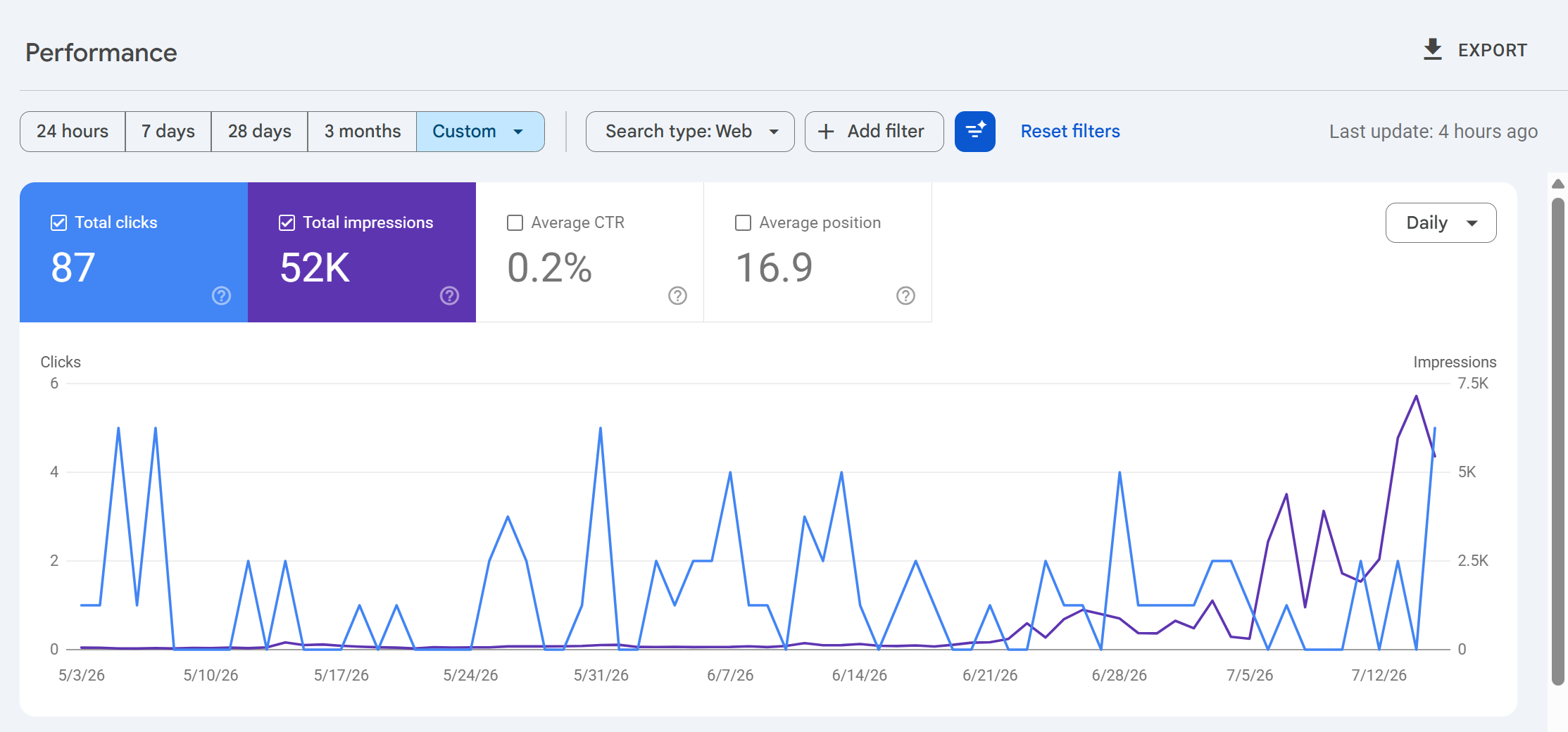
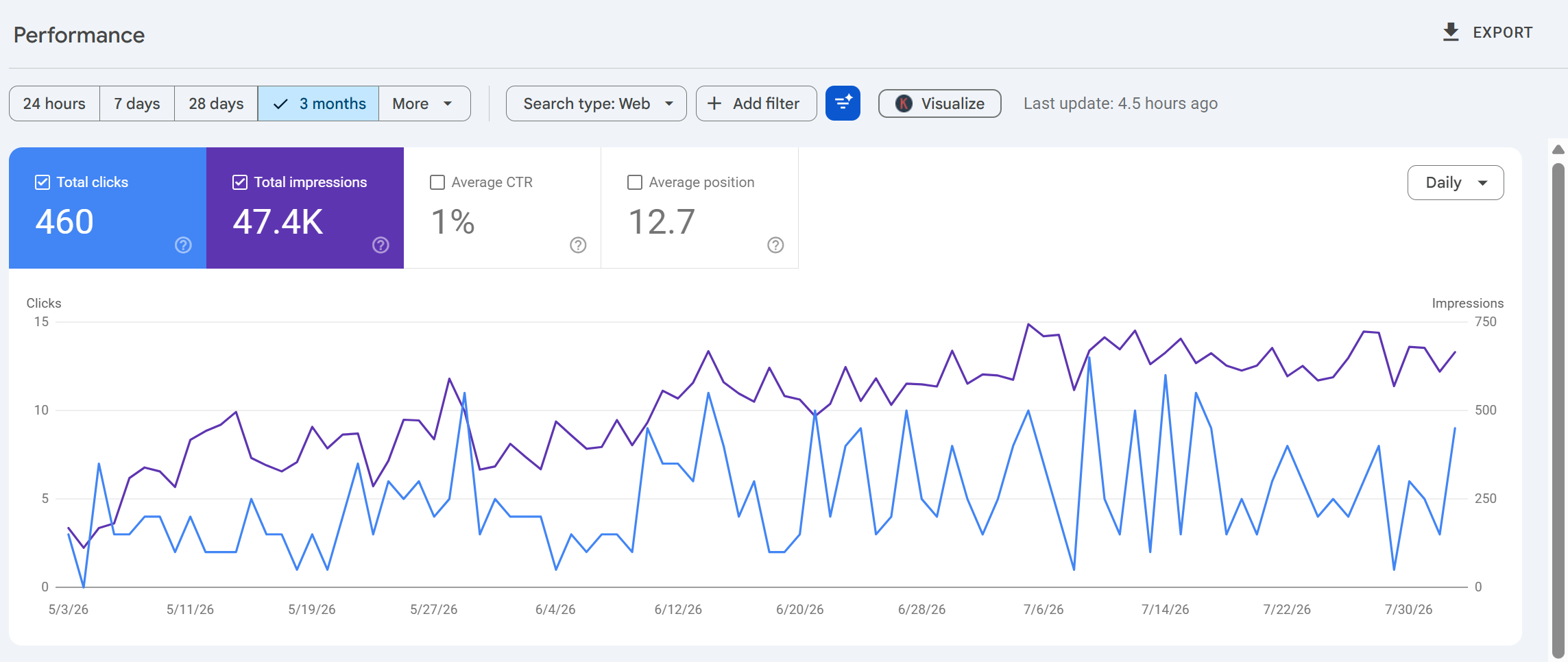
These anonymised Google Search Console captures show monitored organic visibility in the source interface. They are not promises of rankings, leads, revenue or sole attribution. A responsible review still checks the baseline, period, pages, market conditions and work completed.
Verified GrowthLabs credentials
We have confirmed that the supplied partner and certification artwork is authorised for GrowthLabs. Each credential is shown in its original supplied form and placed beside the service it supports.

Platform credential
Semrush Certified Agency Partner credential supplied and confirmed for GrowthLabs.

Public rating artwork
GrowthLabs Google Reviews artwork displays a 5.0 rating; no review-count claim is added without a supplied count.
View the Google Business ProfileCredentials establish platform familiarity; the adjacent account captures show selected reported performance. Neither replaces a scope-specific audit, current platform verification or an agreed definition of a qualified conversion.
One clear home for every intent
Not every keyword deserves a new URL. Closely related searches should be consolidated when one page can satisfy the same intent, and the keyword map should explain why every planned page exists.
Orient travellers, answer broad destination questions and connect them to relevant experiences and packages.
Present specific commercial offers with a distinct audience, route, duration, inclusions, proof and next step.
Support distinct trekking, tour or experience demand and answer accurate, high-value preparation questions.
Align content with real booking windows while showing who is responsible for the experience and information.
Be useful enough to trust
Strong travel content identifies who created or reviewed it, when practical information was checked, what direct experience supports the advice and which official sources apply to changing safety, permit, health or visa information.
Use genuine photography and operator knowledge where available. Never invent first-hand route or destination experience.
Date changeable claims, name the reviewer and link to official sources where safety, health, permits or visas are discussed.
Travel SEO process
Clarify destinations, packages, margins, source markets, seasons and the meaning of a qualified enquiry.
Review keywords, competitors, technical health, content, page roles, internal links and conversions.
Assign clusters to destination, package, activity and support pages while removing unnecessary overlap.
Strengthen technical foundations, content, internal links, trust and enquiry routes.
Build useful planning depth around the destinations and offers that matter.
Review non-brand visibility, qualified organic traffic, enquiry quality and seasonal performance.
Measure beyond sessions
Seasonality and long research journeys make last-click attribution incomplete. Reporting should compare performance with actual planning and booking windows.
Visibility across priority destination and package clusters, qualified non-brand visits and engagement with itinerary pages.
Enquiry and WhatsApp actions, booking starts, confirmed bookings where available and organic contribution by source market.
Related expertise
Travel SEO questions
Travel SEO improves organic discovery for destinations, activities, packages, itineraries and traveller questions through keyword research, site architecture, technical SEO, useful content, internal links, trust and conversion planning.
Travel demand is seasonal, location-led and research-heavy. The strategy connects inspiration, planning, comparison and transactional searches while managing catalogues, similar itineraries, source markets and booking journeys.
Yes. A focused operator can prioritise destinations, activities and source markets where it has genuine expertise and a competitive offer instead of trying to cover the entire market.
Only when a package has distinct value, demand and enough useful information to satisfy the search. Near-duplicate itineraries should be consolidated or clearly differentiated.
GrowthLabs can provide keyword architecture, content strategy, page briefs, conversion-focused copy and optimisation. Subject-matter experts should supply or review changing destination, safety, permit, health and itinerary details.
Yes. Source-market research, language, currency, trust, seasonality and technical international SEO may be included when they fit the business. Scope depends on the countries and languages involved.
Timing depends on website authority, technical condition, competition, destination demand, content quality, seasonality and implementation speed. Priorities should launch before relevant booking windows.
Share the travel website, main destinations, source markets, priority packages, strongest seasons and current Search Console or analytics access if available.
Build destination authority that supports enquiries
Share your priority destinations, markets and season. GrowthLabs will identify where demand belongs, which pages deserve priority and how the website can make the next step easier.
No booking maze and no forced package. Use the secure form, WhatsApp, email or call us directly.