
Priority problem
Hundreds of findings, no priority
Automated crawlers can surface signals, but teams need to know which issues affect important pages, what evidence supports the concern and what should happen first.
Technical SEO · Content architecture · Local search · Prioritisation
GrowthLabs provides SEO audit services in Nepal for websites that need a clear diagnosis before another redesign, migration, content programme or monthly SEO engagement. The audit connects technical SEO, search intent, page architecture, content quality, internal links, local signals, conversion paths and measurement.
Share the domain, target markets, known changes, CMS, priority services and access available for Search Console and analytics.

SEO Audit Services in Nepal / Decision summary
A useful seo audit services in nepal engagement connects the immediate business constraint to the capability, customer journey and measurable outcome that can address it.
Priority problem
Automated crawlers can surface signals, but teams need to know which issues affect important pages, what evidence supports the concern and what should happen first.
Connected capability
Clarify business priorities, target markets, important pages, website history, known changes and the performance questions the audit must answer.
Working outcome
Replace an overwhelming issue list with an evidence-led sequence of SEO actions your team can implement.
Start with context, not a package. Share the current website, offer, audience and result that needs to improve.
Request an SEO auditThe objective
Replace an overwhelming issue list with an evidence-led sequence of SEO actions your team can implement.
What gets in the way
Automated crawlers can surface signals, but teams need to know which issues affect important pages, what evidence supports the concern and what should happen first.
A technically clean website can still underperform when commercial pages are missing, overlapping or poorly aligned to the way customers search and decide.
Content quality depends on usefulness, originality, entity clarity, evidence, structure and task completion, not an arbitrary length or keyword density.
Redirects, URL changes, canonicals, indexation, internal links and lost page relationships can explain performance problems that a current snapshot misses.
An audit creates no value when developers, writers, designers and business owners do not know which action they own or how completion will be checked.
The system in context
Rankings matter when they create relevant visibility, qualified visits and a credible path to conversion.

Capabilities
01
Clarify business priorities, target markets, important pages, website history, known changes and the performance questions the audit must answer.
02
Review discoverability, robots directives, sitemaps, canonical signals, status codes, duplicate paths and the relationship between submitted and indexed pages.
03
Evaluate rendering, templates, metadata, structured data, internal architecture, mobile experience and performance issues in context.
04
Map commercial and informational intent to strong canonical destinations, identify missing coverage and reduce internal competition.
05
Review titles, headings, answers, supporting concepts, evidence, images and page structure for usefulness and semantic completeness.
06
Assess how navigation, hubs, contextual links, breadcrumbs and anchor language distribute discovery and topical relationships.
07
Where relevant, review Google Business Profile connections, business information, location signals, local pages and conversion routes.
08
Connect findings to measurable symptoms, owners, dependencies, validation steps and a practical priority sequence.
What the work creates
01A defensible SEO diagnosis
02A keyword-to-page architecture
03Priorities organised by impact and effort
04Clear implementation and validation ownership
Technical and organic-search evidence
The visible query and landing-page outcomes begin with technical accessibility, clear page ownership and intent-aligned content. These supplied captures show monitored search visibility; they do not isolate one technical change or promise the same result elsewhere.
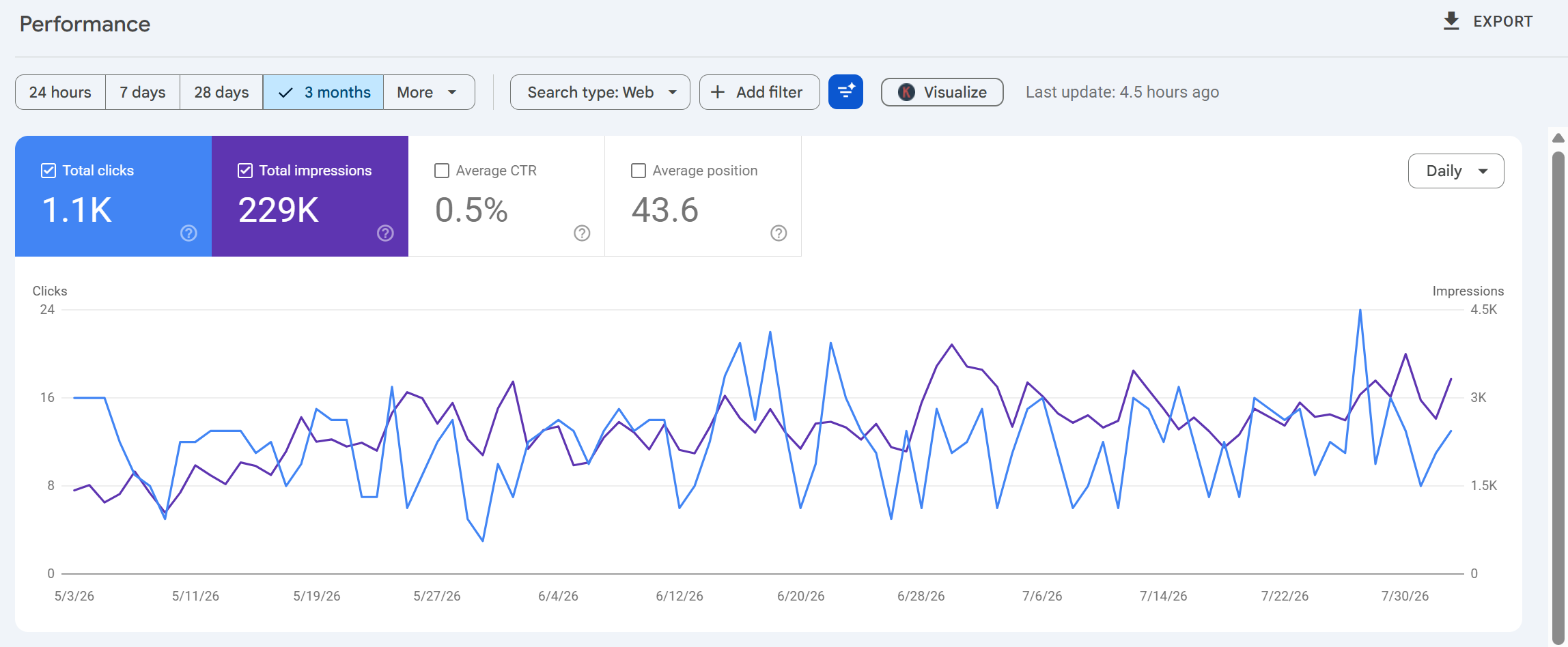
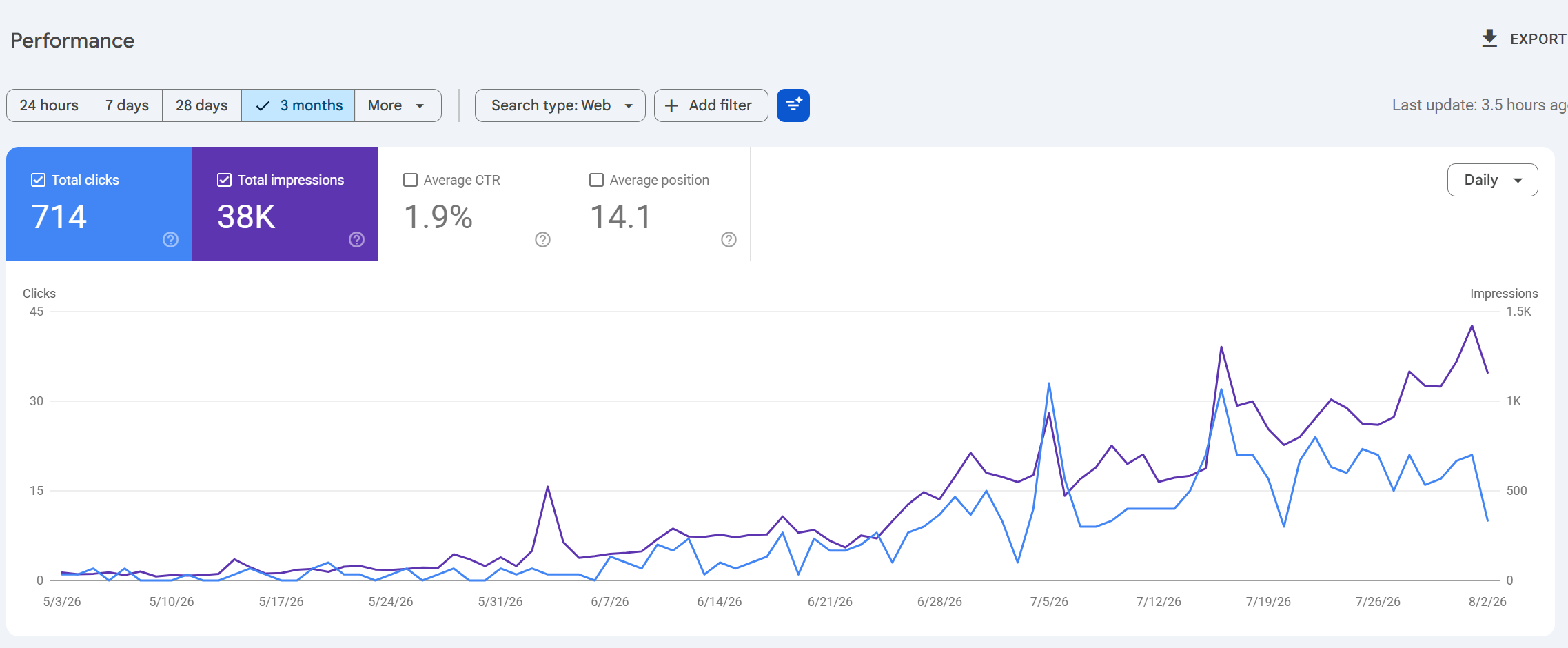
These anonymised Google Search Console captures show monitored organic visibility in the source interface. They are not promises of rankings, leads, revenue or sole attribution. A responsible review still checks the baseline, period, pages, market conditions and work completed.
Verified GrowthLabs credentials
We have confirmed that the supplied partner and certification artwork is authorised for GrowthLabs. Each credential is shown in its original supplied form and placed beside the service it supports.

Platform credential
Semrush Certified Agency Partner credential supplied and confirmed for GrowthLabs.

Public rating artwork
GrowthLabs Google Reviews artwork displays a 5.0 rating; no review-count claim is added without a supplied count.
View the Google Business ProfileCredentials establish platform familiarity; the adjacent account captures show selected reported performance. Neither replaces a scope-specific audit, current platform verification or an agreed definition of a qualified conversion.
Audit deliverables
A usable audit is specific enough for action and clear enough for stakeholders to understand why the work matters.
Describe the observable issue, affected template or URLs and the evidence used to identify it.
Connect the issue to crawling, indexing, relevance, user experience, conversion or measurement without exaggerating certainty.
Provide a technically and editorially clear recommendation, including examples or acceptance criteria where useful.
Assign development, content, design, analytics or business ownership and place the work in a dependency-aware sequence.
Define the crawl, rendered-page, Search Console, analytics or manual checks that demonstrate implementation.
Process
Define business priorities, website history, target markets, important pages and audit questions.
Gather crawl, indexation, rendered-page, performance, content, link and analytics evidence.
Connect patterns to search intent, website architecture, customer journeys and measurable symptoms.
Sequence work by expected impact, confidence, effort, risk, dependencies and business importance.
Explain findings, assign ownership, support implementation and confirm whether changes were completed correctly.
Tools and human review
The audit may use Search Console, analytics, crawling tools, rendered-page inspection, performance diagnostics and manual search analysis. Tool scores are inputs, not the final recommendation.
Efficiently identify patterns across status codes, metadata, canonicals, links, directives, templates and performance diagnostics.
Judge intent, page purpose, content usefulness, entity clarity, trust, conversion relevance and the business consequences of a finding.
Scope and investment
A focused local-service site requires a different crawl, research and stakeholder process from an ecommerce catalogue, migration or multi-market website.
Suitable for a defined performance issue, important template, local-search problem, launch review or smaller website.
Suitable when technical, architectural, content, local, authority and measurement systems must be reviewed together.
Related expertise
FAQ
Scope can include crawling, indexation, technical SEO, metadata, structured data, keyword-to-page mapping, content quality, internal links, local SEO, conversion paths, analytics and a prioritised implementation roadmap.
It is an input. A complete audit interprets tool evidence against search intent, business priorities, templates, website history, customer journeys and implementation constraints.
Useful moments include before a redesign or migration, after an unexplained decline, before a major content investment, when pages compete with each other or when an existing SEO programme lacks direction.
Access is strongly useful because it provides query, page, indexation and behaviour context. A limited audit can still begin without it, but conclusions and priorities may be less complete.
Implementation can be included separately or handed to the client's team with clear guidance. The audit scope states whether fixes, validation and ongoing support are included.
Timing depends on website size, access, markets, templates, history, issue complexity and stakeholder review. GrowthLabs confirms timing after examining the domain and scope.
No. An audit reduces uncertainty and prioritises improvements, but rankings depend on implementation, competition, relevance, authority, technical conditions and search-system changes.
Send the domain, priority services, target locations, known website changes, current SEO concern and available platform access.
Diagnosis before activity
Share the domain, target market and current concern. GrowthLabs will recommend the appropriate audit depth and the access needed to make it useful.
No booking maze and no forced package. Use the secure form, WhatsApp, email or call us directly.