
Priority problem
Important pages are not indexed
Discovery, crawl access, rendering, canonical selection, duplication, quality, internal links and indexing signals can each affect whether the intended URL becomes searchable.
Crawling · Indexing · Rendering · Architecture
GrowthLabs provides technical SEO services in Nepal for businesses that need search engines to discover, crawl, render, index and interpret the right website pages. The work connects technical evidence with page purpose, internal architecture, content and conversion priorities instead of treating a crawler score as the business outcome.
Share the domain, platform, recent releases or migration history, priority templates and the technical symptom you need investigated.
Technical SEO Services in Nepal / Decision summary
A useful technical seo services in nepal engagement connects the immediate business constraint to the capability, customer journey and measurable outcome that can address it.
Priority problem
Discovery, crawl access, rendering, canonical selection, duplication, quality, internal links and indexing signals can each affect whether the intended URL becomes searchable.
Connected capability
Map important templates, navigation, status codes, directives, sitemaps and internal discovery paths before judging isolated URLs.
Working outcome
Create a technically reliable search foundation and a prioritised implementation path your development, content and marketing teams can validate.
Start with context, not a package. Share the current website, offer, audience and result that needs to improve.
Request a technical SEO reviewThe objective
Create a technically reliable search foundation and a prioritised implementation path your development, content and marketing teams can validate.
What gets in the way
Discovery, crawl access, rendering, canonical selection, duplication, quality, internal links and indexing signals can each affect whether the intended URL becomes searchable.
Parameters, duplicate templates, inconsistent canonicals, redirects and conflicting internal links can leave search systems choosing a different representative URL.
A page that works visually can still expose delayed, incomplete or inaccessible content and navigation to crawlers or users under constrained conditions.
URL changes, redirect gaps, removed content, navigation changes, robots rules and canonical mistakes can interrupt established discovery and relevance.
One metadata, canonical, faceting, pagination or internal-linking defect can affect hundreds or thousands of URLs and waste implementation effort if reviewed one page at a time.
Not every warning has the same consequence. Findings need affected patterns, evidence, expected impact, confidence, owner, dependency and a validation method.
The system in context
A useful SEO audit prioritises issues by impact, evidence, implementation effort and business relevance.

Capabilities
01
Map important templates, navigation, status codes, directives, sitemaps and internal discovery paths before judging isolated URLs.
02
Review what search crawlers can request, which URLs are discoverable, what appears indexed and where signals conflict.
03
Compare source, rendered output and user-visible content for important navigation, headings, links, structured data and conversion paths.
04
Align redirects, canonical annotations, sitemap URLs and internal links around the strongest representative URL for each intent.
05
Strengthen how navigation, contextual links, breadcrumbs and hub relationships communicate hierarchy and page importance.
06
Investigate delivery, responsive behaviour, layout stability and resource patterns where they affect users, rendering or implementation quality.
07
Check whether machine-readable entities, titles, descriptions and directives accurately match visible content and canonical page purpose.
08
Turn findings into acceptance criteria, support release planning and verify the production result rather than assuming a deployed ticket is complete.
What the work creates
01Clearer crawl and index signals
02Fewer conflicting canonical paths
03Technical priorities tied to important templates
04A validation trail for development work
Technical and organic-search evidence
The visible query and landing-page outcomes begin with technical accessibility, clear page ownership and intent-aligned content. These supplied captures show monitored search visibility; they do not isolate one technical change or promise the same result elsewhere.
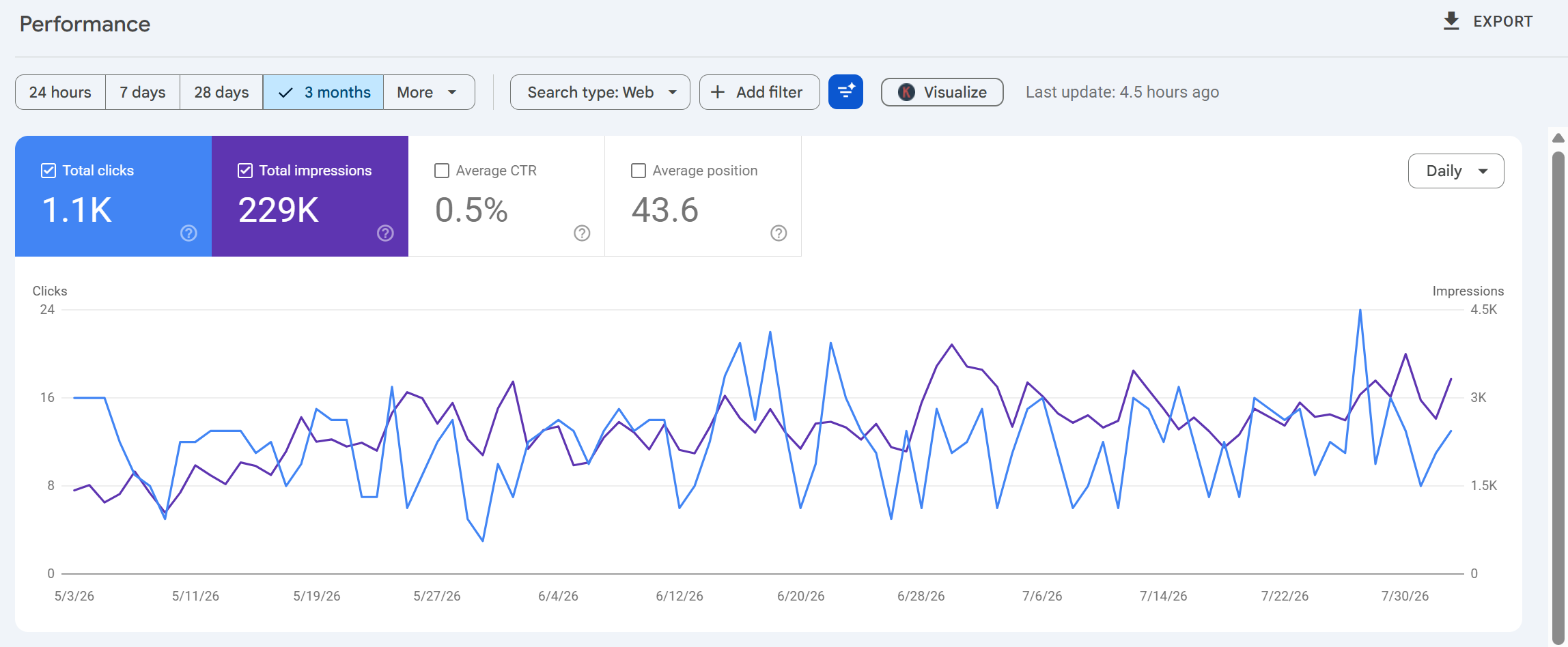
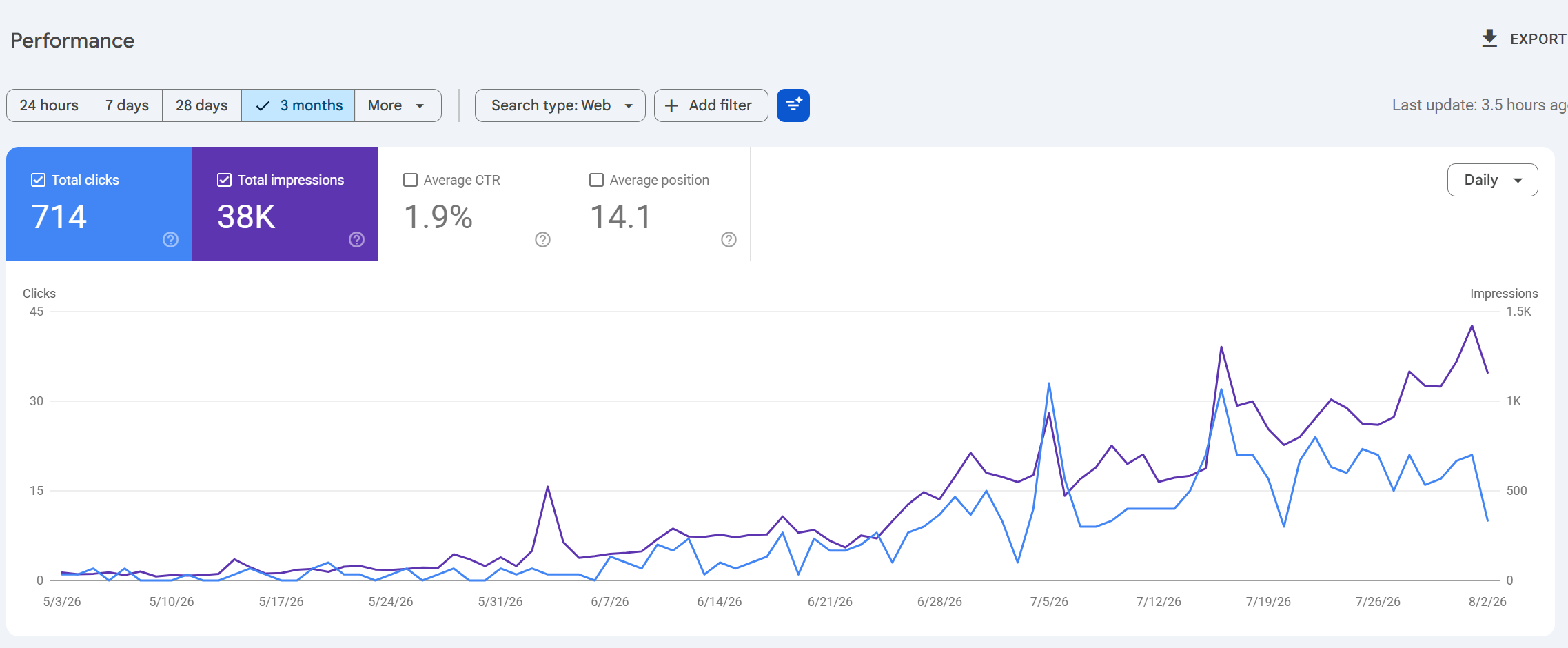
These anonymised Google Search Console captures show monitored organic visibility in the source interface. They are not promises of rankings, leads, revenue or sole attribution. A responsible review still checks the baseline, period, pages, market conditions and work completed.
Verified GrowthLabs credentials
We have confirmed that the supplied partner and certification artwork is authorised for GrowthLabs. Each credential is shown in its original supplied form and placed beside the service it supports.

Platform credential
Semrush Certified Agency Partner credential supplied and confirmed for GrowthLabs.
Credentials establish platform familiarity; the adjacent account captures show selected reported performance. Neither replaces a scope-specific audit, current platform verification or an agreed definition of a qualified conversion.
Technical SEO evidence
A technical finding becomes useful when the affected URLs, source evidence, mechanism, search or user consequence and implementation path are explicit.
Record the status, directive, rendered element, canonical, link path, sitemap entry or platform signal exactly as observed.
Explain what the evidence can indicate, what remains uncertain and which other signals must be checked before recommending a change.
Rank the work using page importance, affected scale, confidence, risk, effort, dependencies and the ability to validate.
Define the crawl, rendered-page, browser, log, Search Console or analytics evidence that will confirm the change.
Process
Define the technical symptom, business-critical pages, website history, platform and implementation constraints.
Gather crawl, rendering, indexation, sitemap, canonical, internal-link, performance and release evidence.
Identify patterns, competing signals, affected templates and the most plausible mechanisms.
Sequence recommendations by consequence, confidence, effort, dependency and release risk.
Re-crawl, inspect rendered output, test production behaviour and monitor relevant search signals after release.
Primary references
These sources support the factual platform and search-system statements on this page. GrowthLabs interpretation, scope and recommendations remain clearly separate from platform documentation.
Technical SEO versus SEO audit
Use this scope when crawling, indexing, rendering, templates, architecture, migrations or technical implementation are the primary constraint.
Use the wider audit when technical conditions must be evaluated together with intent, content, on-page relevance, local search, authority and conversion.
Use managed SEO when the website needs continued technical, content, internal-link and measurement implementation beyond diagnosis.
Platform facts
Google documents redirects and canonical annotations as strong canonicalisation signals and sitemap inclusion as a weaker signal. It also explains that following technical requirements does not guarantee indexing or a particular ranking. GrowthLabs therefore validates combined signals and outcomes rather than selling one tag, score or schema block as a guaranteed result.
A crawler request confirms access to a resource; it does not prove that the page will be selected for the index or shown for a query.
An indexed page still competes on relevance, usefulness, quality, authority, context and many query-dependent systems.
Valid markup can help systems understand eligible page entities, but it must match visible content and does not guarantee a rich result.
Related expertise
FAQ
Technical SEO improves the systems that help search engines access, crawl, render, interpret and index appropriate website pages. It includes crawl controls, sitemaps, canonicals, redirects, JavaScript rendering, internal architecture, templates, structured data and implementation validation.
Scope can include technical discovery, crawling and indexation analysis, rendering review, canonical and duplicate control, internal architecture, performance context, structured data, migration planning and post-release QA.
No. Smaller service websites can still have blocked pages, redirect errors, duplicate URLs, rendering issues or conflicting canonicals. Larger websites usually add scale, template and crawl-management complexity.
No. Technical work can remove barriers and clarify signals, but search engines decide whether and how a page is indexed and ranked.
Yes. GrowthLabs can translate findings into tickets, examples, dependencies and acceptance criteria, then validate the production implementation with the development team.
Common moments include migrations, redesigns, platform changes, unexplained indexation shifts, template growth, JavaScript rebuilds, international expansion or persistent crawl and canonical conflicts.
No. Performance is one technical workstream. Technical SEO also covers access, rendering, indexing signals, architecture, duplication, redirects, metadata and structured data.
Send the domain, platform, priority page types, recent releases or migration history, known symptoms and available Search Console, analytics or development access.
Technical clarity
Share the domain, platform and technical concern. GrowthLabs will define the appropriate evidence, scope and validation path before recommending changes.
No booking maze and no forced package. Use the secure form, WhatsApp, email or call us directly.